Lauded Lyrics: The Immortal Rhymes of NYC Hip-Hop
A computational inquiry into how 28 foundational rhymes—from Sugarhill Gang and Kurtis Blow in 1979–1980 to Slick Rick, Nas, Biggie, and Pop Smoke—travel across five decades, mutating into carrier forks that reverberate through Kendrick, Drake, and modern UK drill.
How 28 Rhymes Rewrote the Global Lexicon
The Oral Dictionary of the Park Jams
Before hip-hop had a single gold plaque or Billboard chart, it existed strictly in the air between two brick apartment towers in the Bronx and Harlem. DJs wired custom sound systems straight into city streetlamp bases, extending the two-second drum break of a funk record into a ten-minute trance while MCs traded call-and-response cadences to keep the crowd moving. When Sylvia Robinson pressed “Rapper’s Delight” onto wax in 1979 and Grandmaster Flash & The Furious Five followed with “The Message” in 1982, those park-jam vocal routines suddenly became permanent cultural source code.
The foundational originators of this era—Melle Mel, Run-D.M.C., Rakim, Slick Rick, and KRS-One—didn’t just write hit songs; they invented the cadences, slang, and structural metaphors that every subsequent generation still quotes like scripture. When Rakim stepped to the mic in 1986 and replaced bouncy party rhymes with internal multisyllabic pockets (“I ain’t no joke...”), he rewrote the physics of how words sit on a snare drum.

Doug E. Fresh & Slick Rick — “La Di Da Di”
CADENCE TEMPLATE (GEN 0)“La-di-da-di, we like to party, we don't cause trouble, we don't bother nobody.”
Captured live at the Manhattan Center, Rick's melodic, British-inflected cadence was not merely a song—it became the single most quoted line in hip-hop history with over 1,000 downstream homages.

Grandmaster Flash & The Furious Five — “The Message”
CIVIC PROTEST“Don't push me cause I'm close to the edge / I'm trying not to lose my head.”
Melle Mel injected visceral urban realism into disco party raps, documenting the economic distress of the 1980s South Bronx.

Run-D.M.C. — “Sucker M.C.'s”
BOOM-BAP PROTOTYPE“Two years ago, a friend of mine / Asked me to say some rhymes for him.”
Run-D.M.C. stripped away the electro synthesized glitz for raw 808 kick-drums and street leather, creating the benchmark narrative opening that Snoop and Biggie would study.

The Sugarhill Gang — “Rapper's Delight”
FIRST 12-INCH WAX“I said a hip, hop, the hippie, the hippie, to the hip hip hop, and you don't stop...”
The first commercially successful hip-hop record, codifying park-jam rhyming into a global phenomenon.

Kurtis Blow — “The Breaks”
FIRST GOLD CERTIFIED“These are the breaks, break it up, break it up, break it up!”
The first gold-certified rap song, teaching an entire generation how to ride funk basslines without a band.
When Single Bars Codified Borough Sovereignty
By the turn of the 1990s, New York hip-hop hardened into an intense, hyper-local rivalry across housing projects and subway lines. Producers armed with E-mu SP-1200 and Akai MPC60 samplers chopped dusty Blue Note jazz horns, soul vocal cries, and kung-fu dialogue over neck-snapping boom-bap drums. Every borough claimed its own sonic flag: Queensbridge’s cold cinematic realism (Nas, Mobb Deep), Bed-Stuy and Clinton Hill’s regal street swagger (The Notorious B.I.G.), Staten Island’s raw Shaolin chamber mathematics (Wu-Tang Clan), and the Native Tongues’ jazz-inflected Afrocentrism (A Tribe Called Quest).
In the Golden Era, quoting another MC’s two-bar opening wasn’t biting—it was a high-stakes salute. Producers like DJ Premier made a science of scratching a two-second vocal phrase from Nas, Rakim, or Prodigy into the hook of a brand-new record, turning a single verse from Illmatic or Enter the Wu-Tang into an immortal chorus heard across decades.

Nas — “N.Y. State of Mind”
+30y LINEAGE · 7 CITATIONS“I never sleep, 'cause sleep is the cousin of death.”
A haunting five-word distillation of inner-city insomnia that Kendrick Lamar, J. Cole, and Lil Wayne would each cite as scripture.

Wu-Tang Clan — “C.R.E.A.M.”
+31y LINEAGE · 6 CITATIONS“Cash rules everything around me / C.R.E.A.M. get the money / Dollar dollar bill, y'all.”
The ultimate financial mantra of the American underclass, permanently entering Merriam-Webster and referenced by Drake, Pusha T, and French Montana.

The Notorious B.I.G. — “Juicy”
+30y LINEAGE · 6 CITATIONS“It was all a dream, used to read Word Up magazine.”
The canonical American hip-hop origin story, balancing the gritty crack-era sidewalks of Fulton Street with radiant melodic charisma.

Mobb Deep — “Shook Ones, Pt. II”
+29y LINEAGE · 6 CITATIONS“Ain't no such things as halfway crooks / Scared to death, scared to look.”
Prodigy's cold ultimatum that Eminem used to dismantle his opponents in the final battle of 8 Mile and that J. Cole echoed decades later.
The Carrier Fork: When a Citation Becomes an Amplifier
Following the tragic losses of Biggie and Tupac, New York hip-hop split into two massive forces that ruled both global pop charts and neighborhood barber shops. Uptown and at Bad Boy/Roc-A-Fella, Jay-Z, Diddy, and DMX pushed NYC rap into arenas with glossy soul loops and stadium-sized hooks. At the exact same time, down on Canal Street and 125th Street, DJ Clue, Kay Slay, Whoo Kid, and a young 50 Cent turned the street mixtape into an underground wire service—hijacking classic Golden Era beats and flipping 1980s/90s vocal lines before the major labels even knew a track existed.
This era birthed “Quoting the Quoter.” When Jay-Z interpolated Biggie, Nas, or Slick Rick on a multi-platinum album—or when Cam’ron, Jadakiss, and 50 Cent flipped a 1994 underground bar into a street anthem—millions of new listeners absorbed the lineage, turning local NYC slang into a global language.

JAY-Z — “Dead Presidents II”
GEN 1 CARRIER AMPLIFIER“I'm out for dead presidents to represent me.”
DJ Premier scratched Nas's 1994 line into the defining hook of Reasonable Doubt, creating the ultimate carrier fork that J. Cole, Kendrick, and Drake later cited.
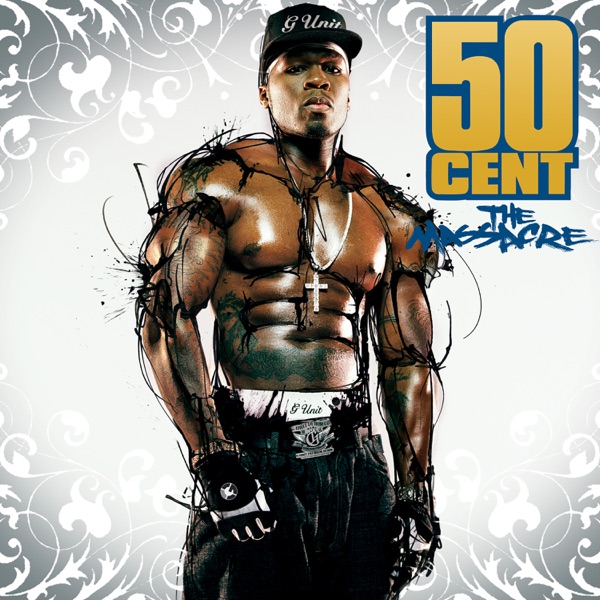
50 Cent — “Many Men (Wish Death)”
BULLETPROOF AXIOM“Many men, many many many many men / Wish death upon me / Lord I don't cry no more...”
50 Cent survived nine gunshot wounds to turn street mortality into stadium rap supremacy, laying the groundwork for Pop Smoke and 21 Savage.

Cam'ron / Dipset — “Oh Boy”
UPTOWN ANTHEM“Boy, boy, boy, boy / It's the Roc, Dipset...”
Just Blaze chopped a Rose Royce vocal sample into Harlem street anthems that dominated NYC radio and canal street mixtapes.

DMX — “Ruff Ryders' Anthem”
STADIUM STREET MOTIF“Stop, drop, shut 'em down, open up shop / Oh, no, that's how Ruff Ryders roll!”
Swizz Beatz's synth fanfare and DMX's gravel roar single-handedly dethroned shiny-suit pop rap and brought raw grit to the top of Billboard.
Underground Preservation, Revival & The Drill Metamorphosis
In the streaming era, hip-hop’s entire forty-year catalog sits one tap away—and a new wave of New York and East Coast traditionalists treated that archive like a museum heist. From Joey Bada$$ and Pro Era reviving 1995 boom-bap in Brooklyn to Roc Marciano and Griselda (Westside Gunn, Conway the Machine, Benny the Butcher) stripping away the drums entirely for eerie, opulent crime loops, modern lyricists wear their Golden Era scholarship on their sleeves.
Today’s citations are multi-layered time capsules (Gen 0 → Gen 1 → Gen 2+). When a modern artist references a 2001 Jay-Z or Dipset flip that originally quoted a 1994 Nas or Wu-Tang bar, three decades of New York street history echo inside a single sixteen-bar verse.

Pop Smoke — “Got It On Me”
DRILL METAMORPHOSIS“Many men, many many many many men / Wish death upon me / Have mercy on me...”
Pop Smoke re-imagined 50 Cent's 2003 cadence over London/Brooklyn drill slide-808s, completing a 17-year inter-borough metamorphosis.

Joey Bada$$ — “Survival Tactics”
PRO ERA MOVEMENT“It's either you're with us or you against us / It's Pro Era, it's a movement.”
At age 17, Joey Bada$$ ignited a worldwide revival of 1990s New York lyricism with 1999, bridging Flatbush to the world over classic boom-bap loops.

Griselda (Westside Gunn & Conway) — “Dr. Birds”
DRUMLESS RENAISSANCE“Flygod is an awesome god / Hit the pot with the left...”
Griselda and Daringer stripped the drums entirely, reviving the dark cinematic storytelling of 1995 Raekwon and Prodigy.

Roc Marciano — “Tek to a Mack”
UNDERGROUND ARCHITECT“Turn a tek to a Mack, push the black Lexus back / Pimping in the Cadillac...”
Roc Marciano pioneered the 2010s drumless neo-noir production style that spawned the Griselda, Boldy James, and modern underground sound.
Across four distinct eras, New York City hip-hop built a living open-source language. Every bedrock bar below functions like a root node in a version control graph. Explore the interactive 3-column Lyric DNA Sandbox to inspect word-level diffs, trace multi-generational citations, and hear 30-second audio previews.


Trace Any Bedrock Bar Through Time
Select any foundational rhyme from the catalog below to render its complete 3-column generational flow diagram (Gen 0 → Gen 1 → Gen 2+), hear 30-second audio snippets, and compare lyrics word-for-word.
The World Is Yours
“Whose world is this? / The world is yours, the world is yours”
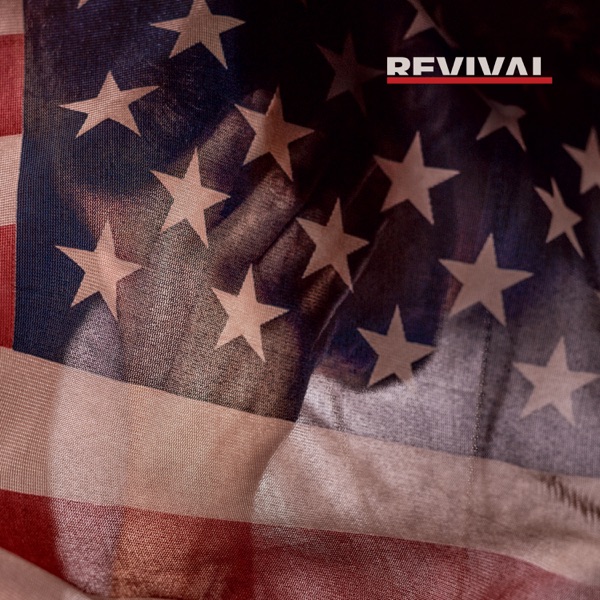
Eminem — “Infinite”
Cadence / Flow Blueprint“Whose world is this? It's mine, it's mine, it's mine, but you can have it if you rhyme”
Eminem's pre-Slim Shady 1996 debut wore its direct Illmatic lineage on its sleeve.
JAY-Z — “Dead Presidents II”
CARRIER FORK“I'm out for dead presidents to represent me / Whose world is this? The world is yours”
CARRIER NODE: DJ Premier famously scratched Nas's 1994 vocal line into Jay-Z's defining hook, igniting the greatest carrier fork in hip-hop history.
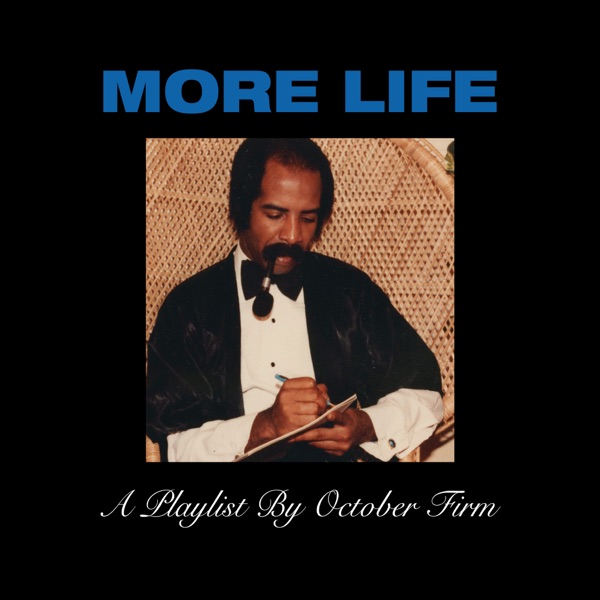
Drake — “Pound Cake”
Direct Vocal Sample / Scratch“Whose world is this? It's mine, it's mine, it's mine / Time to shine”
Drake and Jay-Z revisit Nas's vocal refrain on Nothing Was the Same.

Cordae — “The World Is Yours 2”
Verbatim Homage“Whose world is this? The world is ours, we survived the storm”
A millennial collective affirmation updating Nas's solitary 1994 outlook.

Lupe Fiasco — “Dead Presidents”
GEN 2 · VIA JAY-Z“Out for dead presidents to represent me, but my presidency represents the struggle”
Lupe Fiasco deconstructs the capitalist premise of the Nas/Jay-Z carrier on his First & 15th mixtape series.
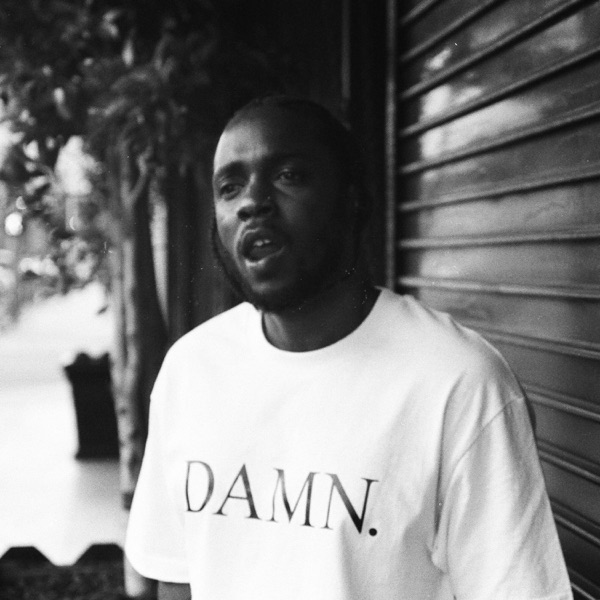
Kendrick Lamar — “Dead Presidents Freestyle”
GEN 2 · VIA JAY-Z“Out for dead presidents to represent me, Compton on my back like a young K-Dot should be”
Kendrick Lamar tackled the classic Premier/Jay/Nas carrier instrumental on his breakthrough pre-fame mixtape run.

J. Cole — “Dead Presidents III”
GEN 2 · VIA JAY-Z“I'm out for dead presidents to represent me, thinking about the world that Nas promised”
J. Cole creates the third installment of the Dead Presidents trilogy, tracing lineage back through Jay-Z directly to Nas.
Nas — “The World Is Yours”
“Whose world is this? / The world is yours, the world is yours”
Eminem — “Infinite”
Eminem's pre-Slim Shady 1996 debut wore its direct Illmatic lineage on its sleeve.
Are We Missing a Lyrical Carrier Fork or Bedrock Couplet?
Hip-hop lineage is a living oral history. We invite musicologists, DJs, crate-diggers, and lyrical scholars to submit unmapped citation branches, verify regional mutations, or dispute attribution timestamps.